Softgoods product design

Softgoods product design turns textiles, foam, mesh and webbing into reliable, comfortable and production-ready products. Unlike rigid components, softgoods are shaped not only by dimensions but also by patterns, seams, tension, padding and the way materials behave during real use. Computer-aided design (CAD) can define volumes and interfaces, but physical samples are usually needed to assess fit, movement, pressure points and assembly.
At ManGo Product Design, we develop softgoods and hardgoods as one system from the start. During the development of the Adam Health sensor, for example, multiple prototypes helped the team refine skin contact, fit, movement and assembly while transforming an oversized early prototype into a compact wearable product. This integrated approach is especially important for wearables, medical devices and other products that combine textiles, rigid parts and electronics.
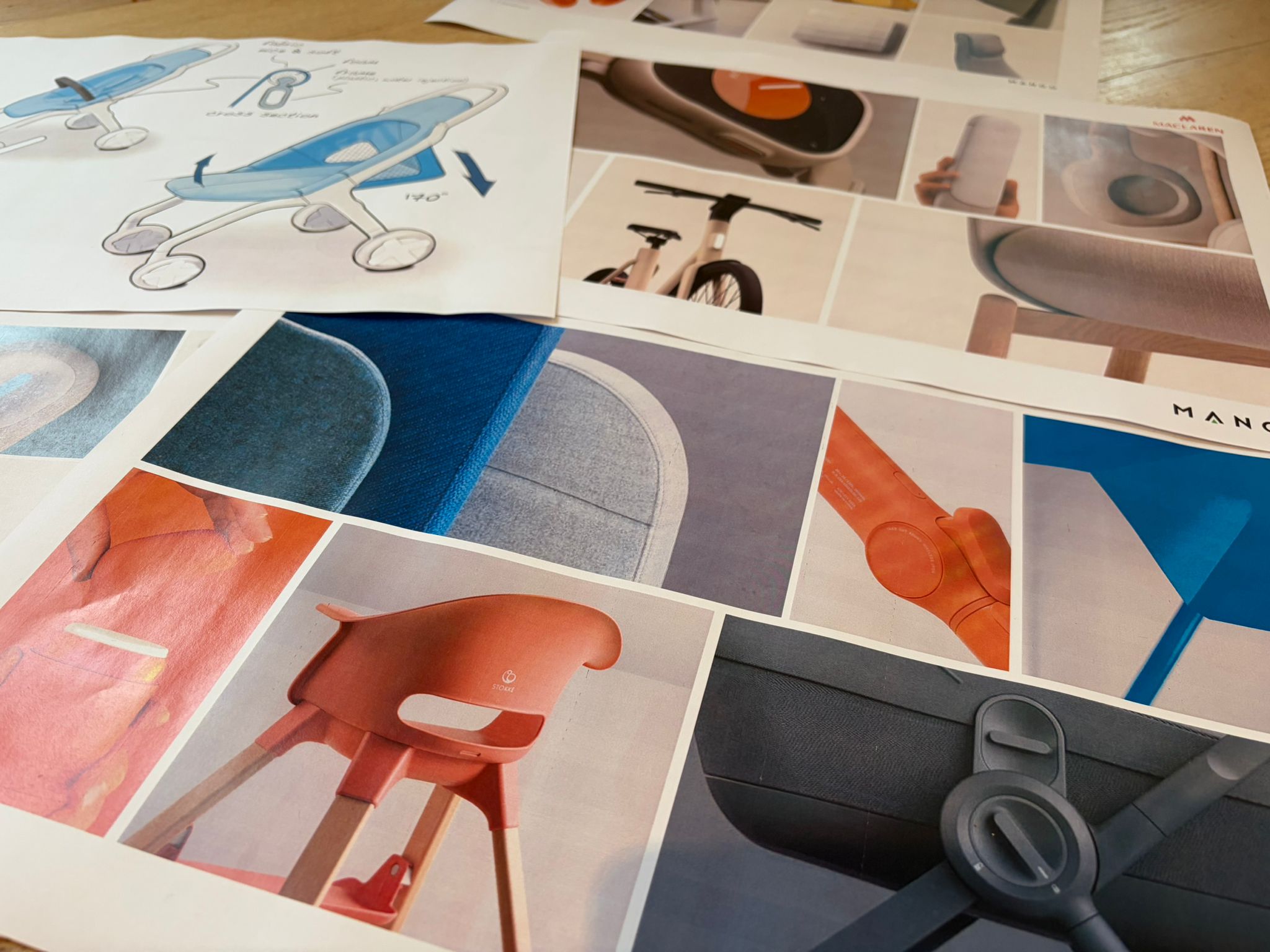
Softgoods are products or components made primarily from flexible materials. These can include woven and knitted fabrics, technical textiles, mesh, foam, felt, leather, webbing, elastic, padding and flexible laminates. Their three-dimensional form is created through patterning, cutting, folding, stitching, bonding, welding and tensioning rather than through rigid manufacturing processes alone.
A softgoods product may be complete in itself, such as a backpack, protective sleeve, medical brace or carrying system. A softgoods component can also form part of a larger product, such as a strap, cushion, textile enclosure or body-contact component. Although the name suggests softness, these products may be structured, reinforced, water-resistant or designed to withstand substantial loads.

Hardgoods are rigid components made from materials such as injection-moulded plastic, metal or glass. Their geometry can usually be defined accurately in 3D CAD and reproduced within predictable dimensional tolerances.
Softgoods respond to stretch, compression, gravity, body shape, loading and repeated use. A design that looks correct on a screen or workbench may behave very differently when it is worn, carried or moved. Digital models remain valuable for defining overall volumes and interfaces, but they cannot fully predict drape, pressure distribution, seam distortion or the feel of a product against the body.

The right prototype depends on the decision you need to make. A simple paper, foam or substitute-fabric model may be enough to test size, volume, access and basic interaction. A functional sample is needed when you must assess fit, adjustment, movement, pressure points, closures or the interface with rigid components. Final-material samples become important when you need to validate finish, seam quality, hardware, cleaning, assembly and production tolerances.
Every prototype should answer a defined question. For example: Does the strap remain stable during movement? Can users adjust it with one hand? Does a seam create a pressure point after extended wear? Does the textile align consistently with the housing during assembly? Recording the result and the resulting design decision prevents sampling from becoming an unfocused sequence of versions.
Planning these rounds into the product development timeline reduces late changes and helps teams avoid expensive production corrections.

A structured product development process resolves user, material, interface and manufacturing decisions in a logical order. The process normally moves through five connected stages.
Start with the product’s function, users and context. Define what it must carry, protect, support or connect; which body sizes and movements it must accommodate; the conditions it must withstand; and any rigid components it must integrate. For wearables and medical devices, differences in anatomy, clothing, strength and dexterity may directly affect fit and usability.

Explore the panel layout, openings, strap positions, adjustment systems, padding, ventilation, access points and placement of rigid components before detailed pattern work begins. Early mock-ups can reveal problems with size, handling and comfort while changes are still quick and inexpensive.
3. Select materials and construction methods
Material selection affects performance, comfort, appearance, cost and manufacturability. Relevant properties may include stretch, strength, breathability, water resistance, abrasion resistance, cleanability and skin compatibility. Materials must also suit the intended cutting, stitching, bonding or welding process. A strong choice balances user requirements with production reality rather than optimising one property in isolation.

4. Develop patterns and physical samples
Pattern development translates the intended form into panels, seams, allowances, folds, reinforcements, closures and attachment points. Use each sample to assess a specific combination of fit, comfort, usability, construction and assembly. Update both the patterns and the sample notes so that the reasoning behind each revision remains traceable.
5. Prepare the design for production
A production-ready softgoods product needs controlled pattern files, material and hardware specifications, a bill of materials, seam details, assembly instructions, critical dimensions and quality criteria. A physical reference sample is often equally important because it communicates the intended shape, tension, feel and finish more clearly than dimensions alone.
Clear development deliverables reduce interpretation and help a factory reproduce the design consistently.
Why must softgoods and hardgoods be designed together?
Many products combine textiles with plastic, metal, electronics or mechanical systems. The user experiences the housing, controls, straps, padding and body-contact materials as one product, so the development team should treat them as one system as well.
The interface determines how securely components connect, how accurately they align and how easily the product can be assembled, cleaned, repaired or replaced. Attachment methods, reinforcement, tolerances and comfort around rigid parts should be resolved before the hardgoods architecture becomes difficult to change. Otherwise, the textile component may become bulky, fragile, uncomfortable or slow to assemble.
Adam Health: integrating comfort, mechanics and electronics
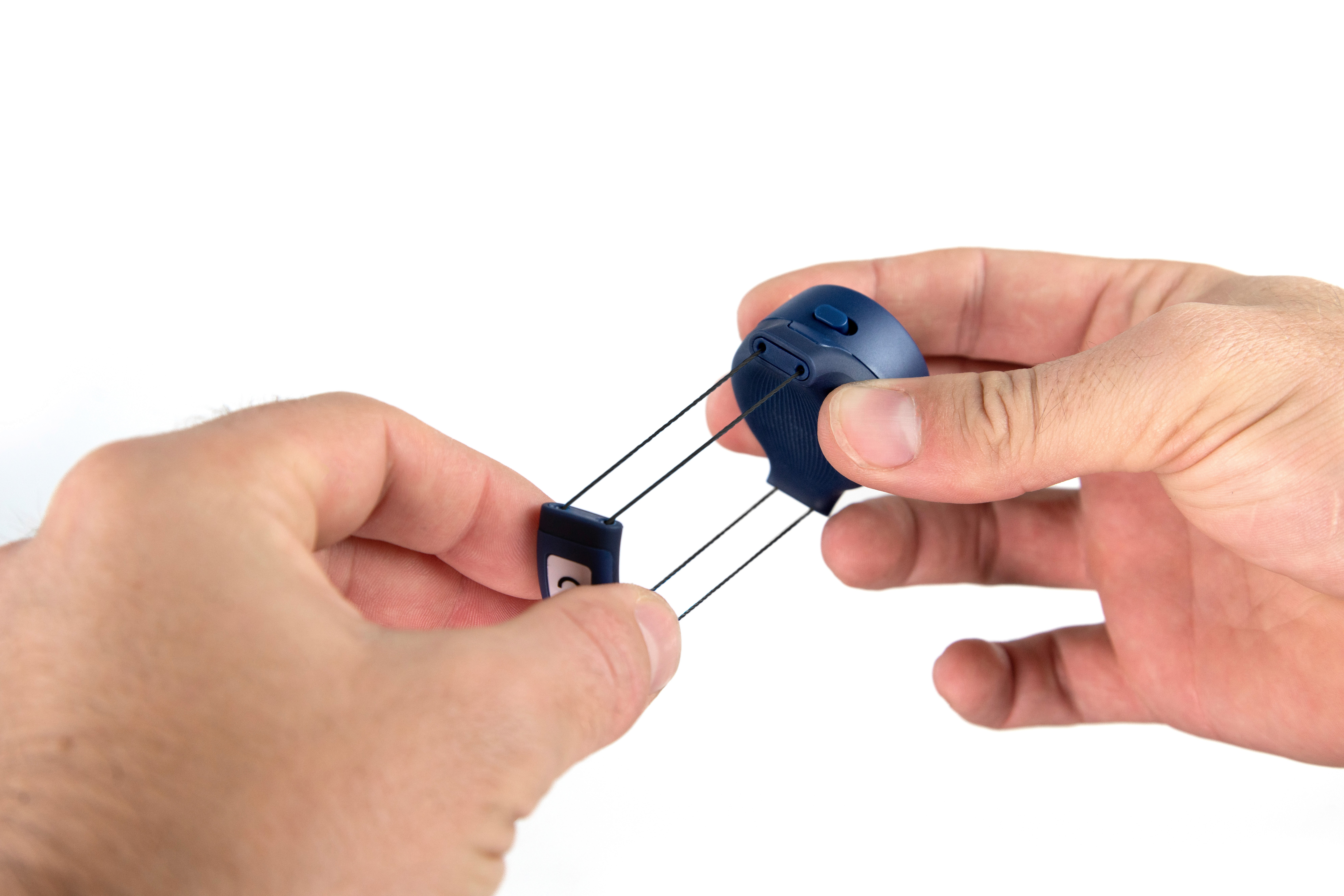
The Adam Health sensor demonstrates why soft and rigid components cannot be developed independently. The early concept combined sensing technology with a body-worn product, so comfort, stable positioning, movement and assembly all affected the mechanical architecture.
ManGo used multiple prototypes to refine the areas in contact with the skin, the adaptive band and the cord mechanism, alongside the rigid housing and internal components. Widening the contact areas helped distribute pressure, while the band and cord arrangement improved fit and reduced unwanted twisting. The project shows how a softgoods decision can affect sensing, mechanics and production at the same time.
What commonly goes wrong in softgoods development?
Problems often begin when the soft component is added after the wider product architecture has already been fixed. Teams may choose materials from small swatches, test fit with too few representative users or move to final materials before volume, adjustment and comfort have been resolved.
Production creates additional risks. Textile tolerances differ from those of moulded or machined components, while bulky seam intersections, difficult alignment and poorly defined reinforcements can make assembly inconsistent. Cleaning, repair, replacement and end-of-life separation should also be considered before the design is handed to a factory.
Material use is only one part of the total cost. Labour, machine time, cutting waste, rework and quality failures may have a greater effect on product development costs. Clear specifications and representative reference samples reduce these risks before production begins.
When should you involve a sample workshop or factory?
A specialist sample workshop or atelier is often most useful during early development. Short communication lines support rapid experiments with patterns, seams, padding and fit, and samples can sometimes be adjusted during a fitting session.
Involve the production factory once the product architecture and main material choices are becoming stable, but before every detail is frozen. The factory can assess the design using its actual machinery, operators, materials, quality controls and supplier network. This exposes details that may be difficult, slow or inconsistent to reproduce at scale.
An attractive workshop prototype is not automatically production-ready. It may depend on hand-finishing or specialist attention that is unrealistic in series production. A robust development route combines flexible early sampling with timely factory review and a representative production reference sample.
How can ManGo support softgoods development?
ManGo Product Design develops products in which textiles, rigid components, mechanisms and electronics must work together. Our industrial designers and engineers can define the product architecture and user requirements, create physical mock-ups, develop rigid components and resolve the interfaces between softgoods and hardgoods.
Where specialist pattern-making, sewing or textile-production knowledge is required, we can coordinate with sample workshops and factories. Test findings can then be translated into clearer pattern revisions, sample briefs, specifications and manufacturing decisions. This approach is particularly valuable for wearables, medical devices, protective equipment, carrying systems and textile products containing electronics or sensors.
Plan the right prototype route
Involve softgoods expertise before the dimensions and interfaces of the rigid components are fixed. Define what each prototype must prove, validate fit and material behaviour in physical samples, and involve the production factory before final specifications are released.
If you are developing a wearable or another textile or hybrid product, contact ManGo Product Design to discuss the right route from early mock-up to production-ready reference sample.